
 GIVE
GIVE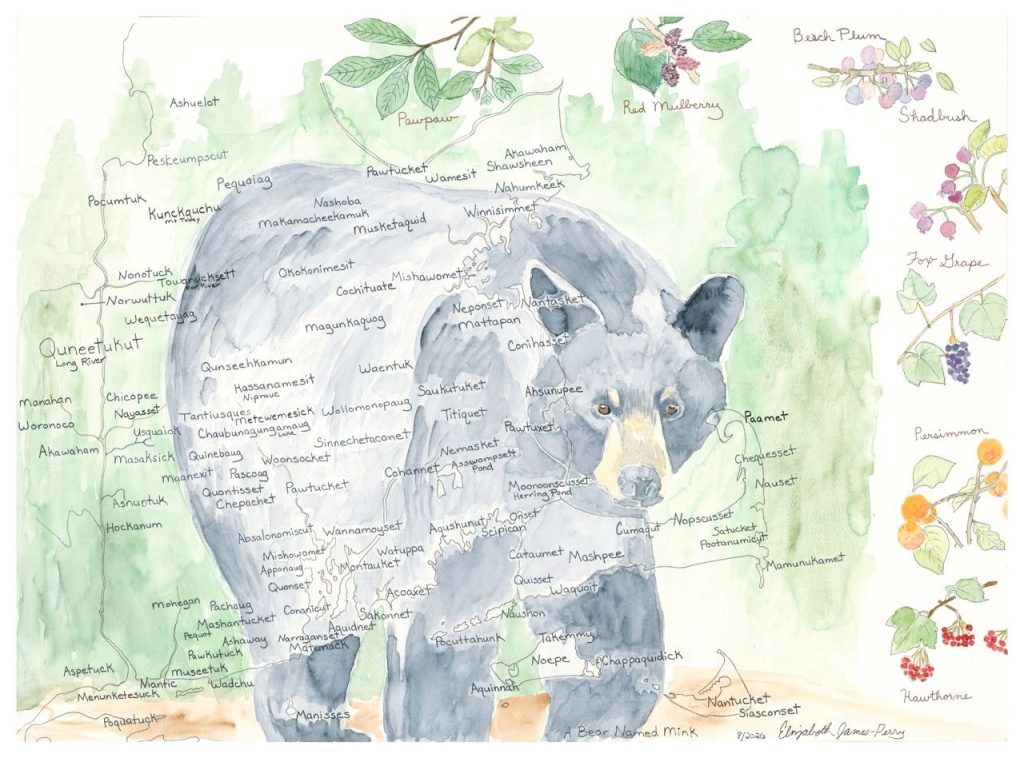
Elizabeth James-Perry (Aquinnah Wampanoag)
A Bear Named Mink, 2026
Digital reproduction of original artwork in graphite, watercolor, and ink
As a teaching museum, MHCAM is fortunate to work with and learn from our faculty and students. Indigenous faculty and students at the College have become valued thought partners as we seek to build relationships with local Native communities and engage in the ongoing process of learning about the ancestral homelands where we work and live today.
As a final project in spring 2025, students in Assistant Professor of History Patricia Dawson’s “Turtle Island Stories and Thought” class made a collaborative quilt as a Living Land Acknowledgement. Inspired by this idea, Museum staff partnered with the College’s Miller Worley Center for the Environment to commission a map with Indigenous place names from celebrated artist Elizabeth James-Perry (Aquinnah Wampanoag).
Completed in August 2026 and timed to coincide with the Museum’s 150th anniversary reinstallation project, Elizabeth James-Perry’s artwork has been digitally reproduced and enlarged for display in the Museum’s lobby. We invite you to learn more about the Decolonized Bear Map project in the description below, written by Professor Dawson in consultation with the artist.
About this project
Living land acknowledgements are a call to live in relationship with all living beings. Here, the black bear symbolizes the land itself. Many Indigenous stories from eastern Turtle Island point to black bears as wise teachers. They teach us how to live in tune with seasonal rhythms, often hibernating during the winter, and feasting on fruits in the summer. By dispersing seeds, black bears plant trees and shrubs, and they help to structure our meadows and forests.
A Bear Named Mink is the fifth in a series of decolonized bear maps, begun in 2020 by artist Elizabeth James-Perry (Aquinnah Wampanoag). In this version, she uses the gentle colors of both the landscape and the bear’s silky fur to unite the Indigenous place names that reference qualities of lands and waters while foregrounding related local Native languages. James-Perry has dedicated her life to reviving Northeastern Native practices of art, sovereignty, and land stewardship and is mindful of the capacity of animals and birds, sharks and whales to be teachers; they are beings that have not forgotten their original instructions. By using bear symbology to equate land itself, the artist demonstrates that the earth has agency, strength, and is worthy of care and respect. Elizabeth James-Perry pushes us to expand our understanding of what it means to acknowledge Turtle Island as Indigenous land.
~Assistant Professor of History Patricia Dawson (Cherokee) in consultation with the artist Elizabeth James-Perry (Aquinnah Wampanoag)
This commissioned project was supported by the Mount Holyoke College Art Museum and the Miller Worley Center for the Environment, in collaboration with the artist and the Zowie Banteah Cultural Center for Indigenous students at Mount Holyoke College.