 GIVE
GIVE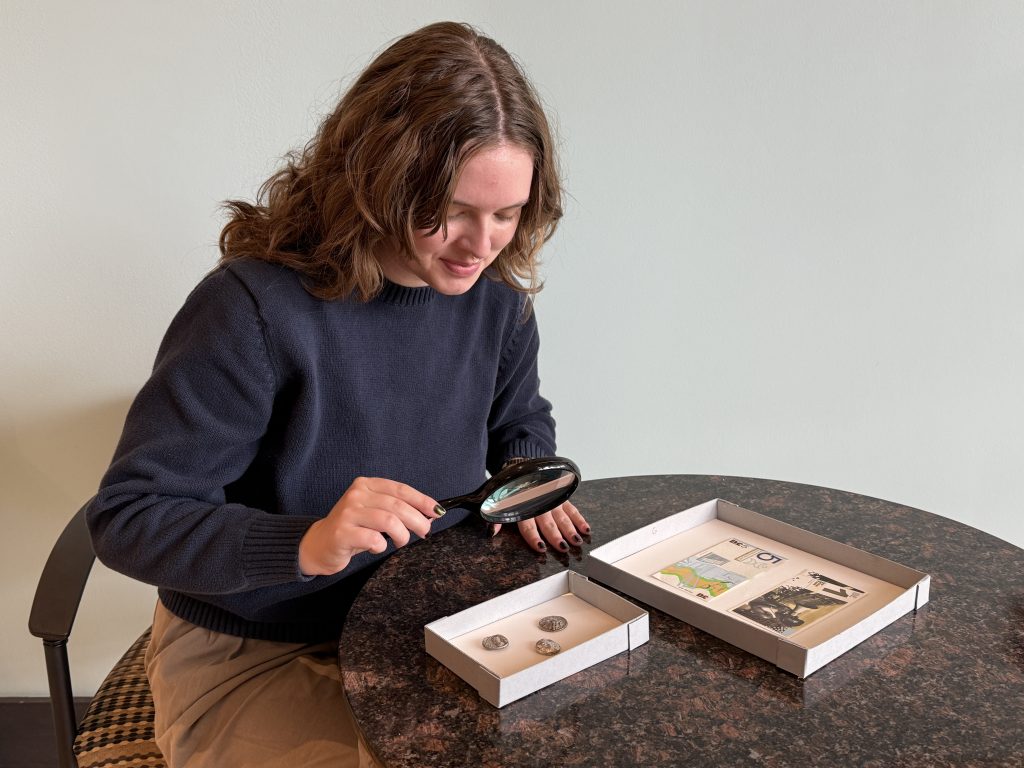
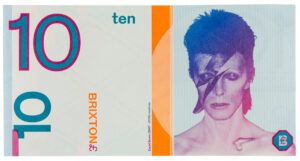
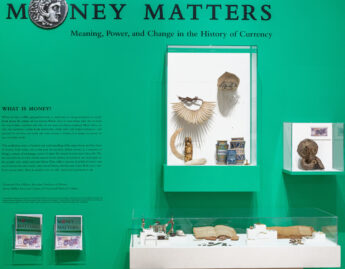
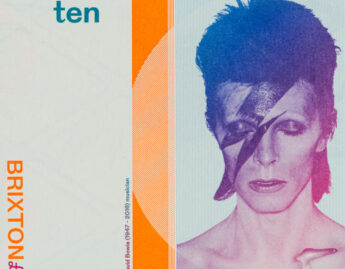
How much money have you spent today? Did you use cash, a credit card, or something else? That was the question Professor Desmond Fitz-Gibbon posed to us on the first day of his “History of Money” course, and the discussion that followed was so lively it took up nearly half of the class period. Reflecting on our everyday experiences with money quickly led to dozens of other questions, as class discussions often do. Does buying my friend food in exchange for a ride to the airport count as spending money? What about IOUs? Cryptocurrency? Unpacking the complicated nuances of money in our lives was a fantastic introduction to the broader story of the Museum objects we would study that semester—ranging from Byzantine era gold coins to a Brixton pound note featuring an image of David Bowie. When thinking about money more in-depth, it becomes clear that these objects are not just a store of value, but also something worth examining for their broader societal impact.
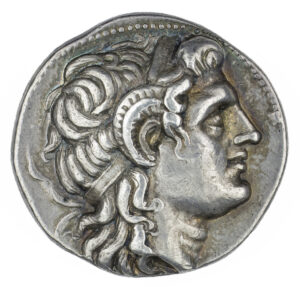
Our nearly weekly sessions at the Museum centered around studying and looking closely at a thematic group of objects followed by a class discussion. The class consisted of students from many different majors, who offered a variety of perspectives into how historical money influenced the people that used it. As an art history major, I often first noticed the imagery of the money and how the transmissibility of that imagery affects the design. In the United States, we are used to money depicting the portrait of a sovereign or other culturally significant figure, which has been a common feature in mass-produced money in many western societies since the era of Alexander the Great. On the other hand, history students often focused more on the political and economic contexts of the objects, whether it was about governmental structures or how the money was actually spent. We also had discussions about how money differed between different societies. A conclusion we quickly reached early in the seminar became a common theme for the rest of the class—money is uniquely equipped to tell a story.
Perhaps the most enlightening discussion was a joint class session at the Museum with Professor Patricia Dawson’s “Material Cultures of Turtle Island” course, where we looked at specific images of Native Americans depicted in U.S. currency and compared them with more recent paintings and photographs. In preparation for the visit, we read excerpts from Phillip Deloria’s Indians in Unexpected Places. The class discussion dug deep into what I found to be one of the most fascinating aspects about studying money: how an image made for wide distribution can impact larger historical narratives.
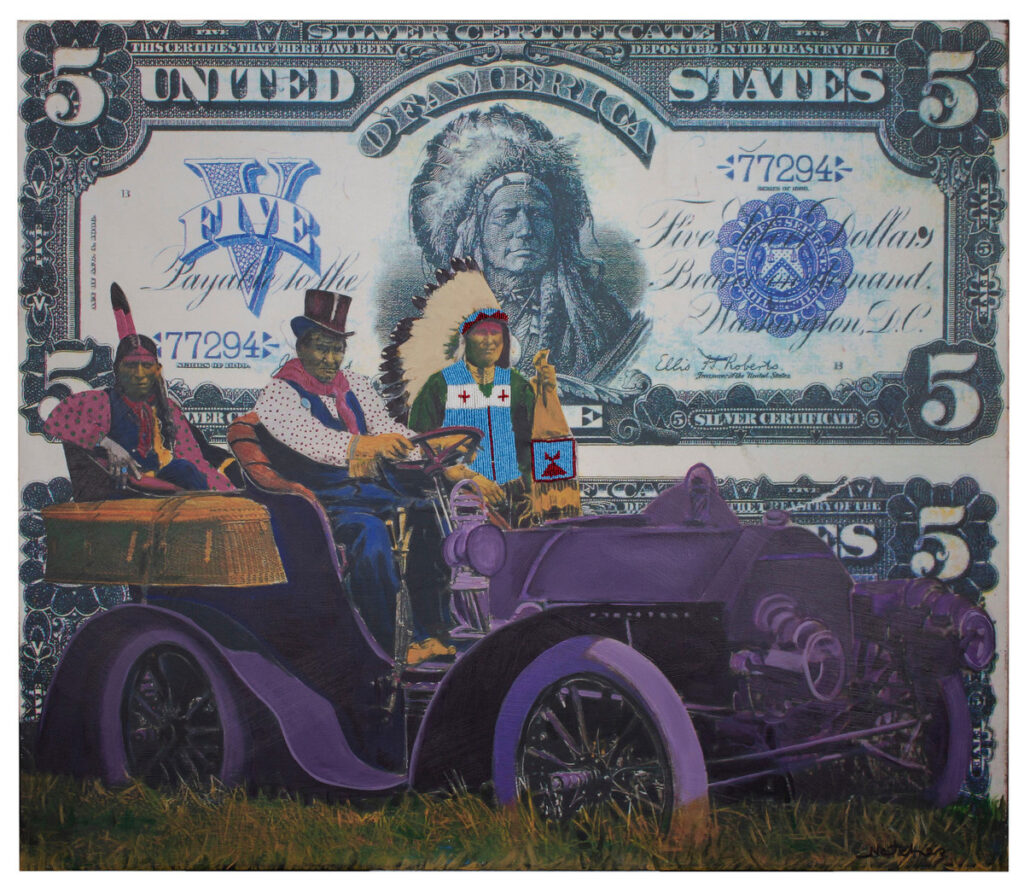
One artwork that stuck with me was Geronimo’s Cadillac (2019) by contemporary Native American artist Stan Natchez (Shoshone-Tataviam). In the foreground of this piece, Natchez adapts a famous photograph of the Apache leader Geronimo sitting at the wheel of a Locomobile Model C. At this moment, Geronimo was a prisoner of the U.S. Army in Fort Sill, Oklahoma.The photograph of Geronimo was intentionally staged to dispel what Deloria calls “imagined separations” of Native Americans and technology. In the backdrop, Natchez adds an enlarged image of a $5 Silver Certificate from 1899. The portrait featured in the certificate is Lakota leader Running Antelope, who is similarly misrepresented, as he is depicted wearing the headdress from a rival tribe. Natchez’s painting is an excellent example of how contemporary Native American artists have reclaimed these manipulated historical images.
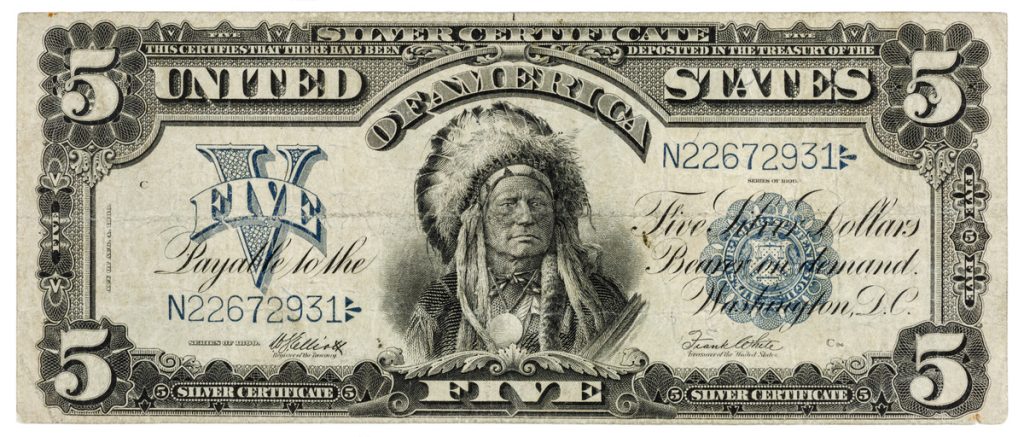
Inspired by these conversations, I chose to research and write about the American $5 Silver Certificate for part of my final project. For this part, each student chose an object from one of our Museum visits to research and write about for a virtual exhibition website, created in collaboration with the LITS Educational Technology Team. In my opinion, this exhibition makes visible the wonderful rabbit hole of ideas we fell down on our first day discussing money. Organized into two sections, the website includes a timeline of the history of money, written by individual students based around the selection of objects we had looked at and read about during the semester. Being such a broad topic, the objects in this section vary wildly, from seemingly plain-looking banknotes to currency made from shells and fiber used by Indigenous cultures in Papua New Guinea. All of these objects are from the Mount Holyoke College Art Museum’s collection, which means we were able to study our objects in-person. The second part of the exhibition focuses on the “story” of money in a section called the “Laboratory.” Small groups of students each tackled a different topic and wrote about a set of objects focusing on a particular aspect of money unrelated to its monetary value. Each of the featured topics demonstrate that money can be thought about as so much more than a thing to be spent. Money illustrates how culture functions and economic systems evolve, while also chronicling periods of resistance and dynamic changes in leadership.
Among my most valuable takeaways from this class is the fact that art is not just what exists in a museum. Of course, the objects in our virtual exhibition are from the MHCAM’s collection, but I could just as easily reach into my wallet and discuss the design of a standard $1 bill. What seemed like mundane, everyday objects to people of the past now reside in museum collections and are incredible displays of what daily life was like. Money can be discussed in so many different ways, and this class and exhibition helped us consider its value beyond the material.