 GIVE
GIVE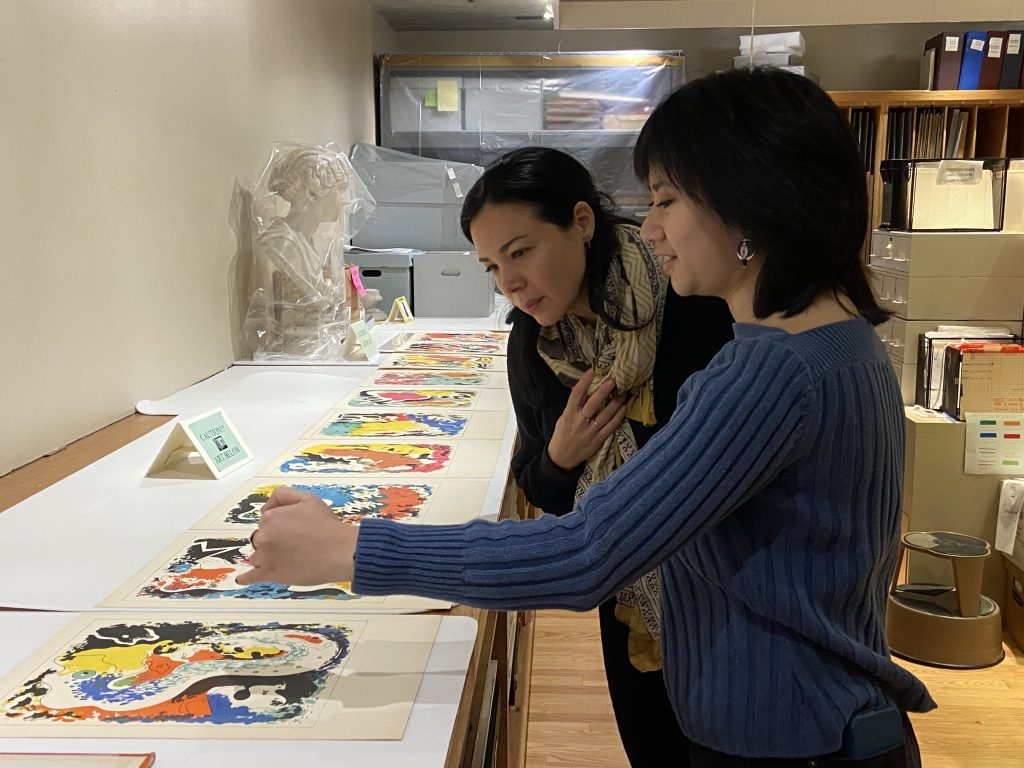
Over the past three years, I have had the pleasure of working at the Mount Holyoke College Art Museum (MHCAM) in the Curatorial and Engagement departments with a staff that has felt like family. As a graduating senior, I am reflecting on my time at MHCAM wearing the many hats of a Student Tour Guide, a Student Museum Educator, and a Curatorial Intern. I hope this blog post will be helpful to future students considering involvement with MHCAM and the museum world more broadly to get a feel for the different departments within a museum. Working at the Mount Holyoke College Art Museum, I have developed critical skills in object-based research, art interpretation, and public engagement, which has added an invaluable depth to my Art History major.
Student Guide Program & Student Museum Educator
I became involved with MHCAM in my sophomore year, developing my gallery engagement skills in the Student Guide Program (SGP) and working with Kendra Weisbin, Curator and Head of Interpretation, and Nina Frank, Assistant Curator of Engagement and Digital Media Specialist. This year-long program unites students of varying class years and majors, all working alongside each other to curate individualized four-object tours of the Museum. We developed our tours around a theme of our choosing, which often incorporated our academic or personal interests, including music, biology, politics, migration, and more. For my tour, I chose to incorporate my passion for the intersectionality of art and music in modernism. As a violinist and Art History and French double major, interpreting art through the lens of music is one of my main interests.
Throughout my tour, “Finding Sound in the Silence: A Close Listening,” I sought to demonstrate how listening to the presence of sound within the frame of the artwork can inform the interpretation of the artwork itself. I centered my tour around Untitled (Open Measure) by Jennie C. Jones, a 2021 mixed media work composed of felt-wrapped acoustic panels and acrylic painted canvas. I was compelled by the aspect of the soundboard’s manipulation of sound in the gallery space. In the tour, I engaged audience members with a “close listening” of artworks to complement the traditional “close lookings” that we typically lead on tours and learn in the classroom.
Following completion of the training program, Student Guides are eligible to become Student Museum Educators (SMEs) to work with the next cohort of guides. I have been a SME since my junior year, and have enjoyed providing feedback on object presentations and tour outlines. I’ve especially loved getting to work with individual guides as their mentor and helping them bring their ideas to fruition.
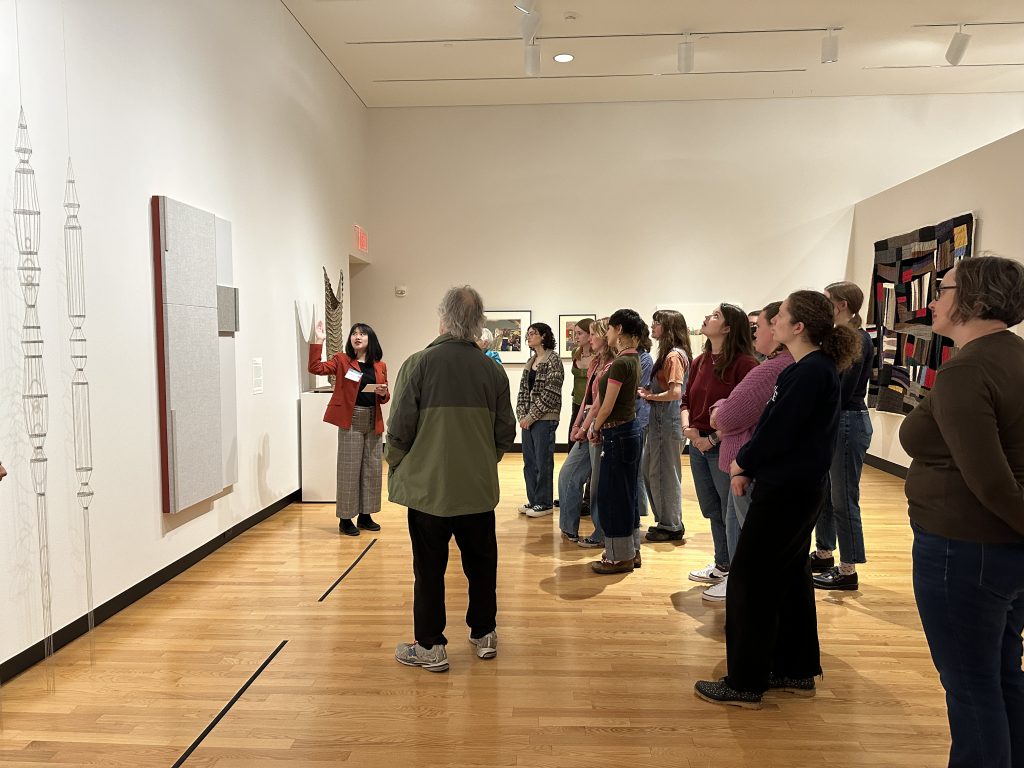
Photo credit: Nina Frank.
Intern Insight #1: Getting involved with the Student Guide Program as early as possible allows you to gain real-world museum experience that will help you consider future internships at MHCAM or other museums. Staying in touch with your cohort will also help establish your network for future job opportunities outside of Mount Holyoke!
Photo credit: Emma Harrison
Curatorial Internship
During my junior and senior years, I’ve worked as one of the Curatorial Interns with Assistant Curator Emily Wood, giving me the opportunity to conduct detailed research on objects in the Museum’s collections, either as they are being considered for re-installation or found to need more research. Thanks to the small size and support of the curatorial staff, I was lucky to be an integral member of the curatorial team and work on a range of projects that curators needed assistance with. For instance, I have worked on proofreading provenance gallery guides, writing object descriptions for the Museum’s online database, and conducting research in the Mount Holyoke College Archives and Special Collections on a bequest from a former Mount Holyoke Classics professor.
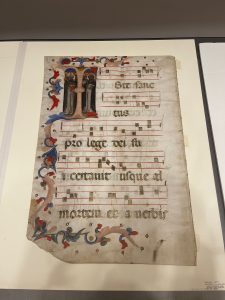
Photo credit: Emma Harrison
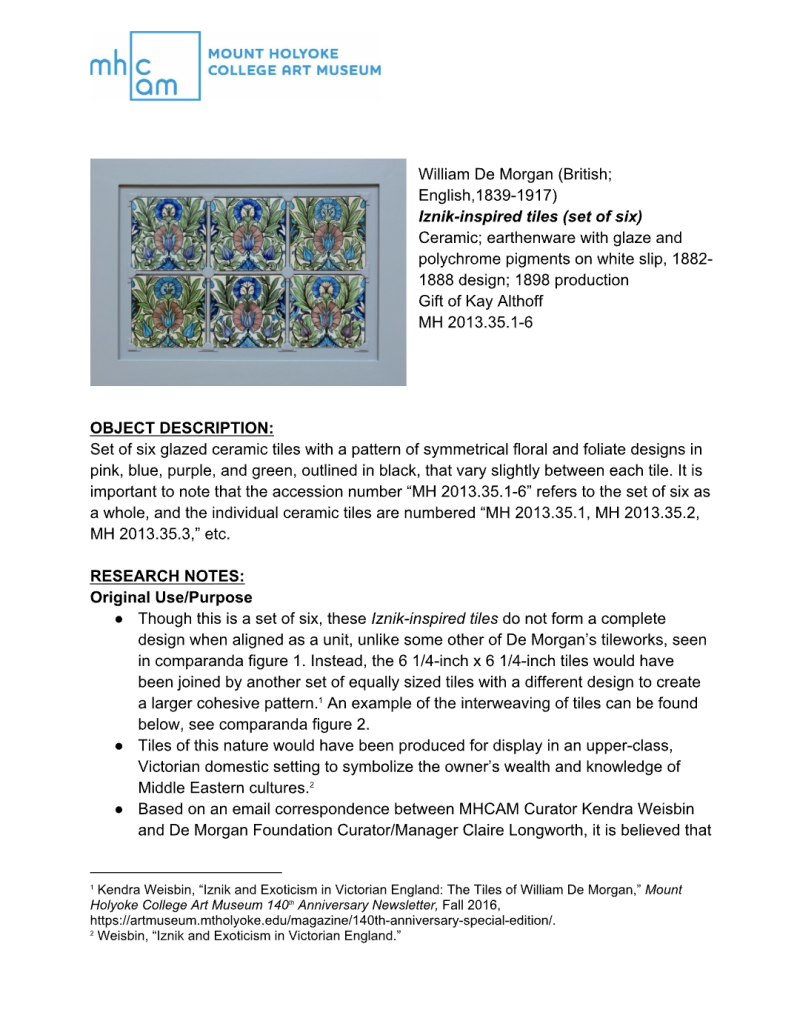
A large part of my role in researching objects in MHCAM’s collection is to deepen the information available in the object files and provide accurate and complete references for future researchers consulting them. Through my work, I have gotten to know certain objects very well, including an Italian medieval music manuscript, a set of 20th century Guatemalan lithographs by Carlos Mérida, and a set of six Iznik-inspired tiles by William De Morgan. Conducting in-depth research on these objects has greatly complemented my studies as an Art History major by applying the analytical and research skills I have learned in the classroom to real-world curatorial work that will positively impact future scholarship. Emily Wood has also been a great support in helping me strategically choose objects that will expand my art historical perspectives in various art mediums, artistic techniques, and cultural traditions across different time periods.
Anatomy of an MHCAM Object Research Summary (ORS)
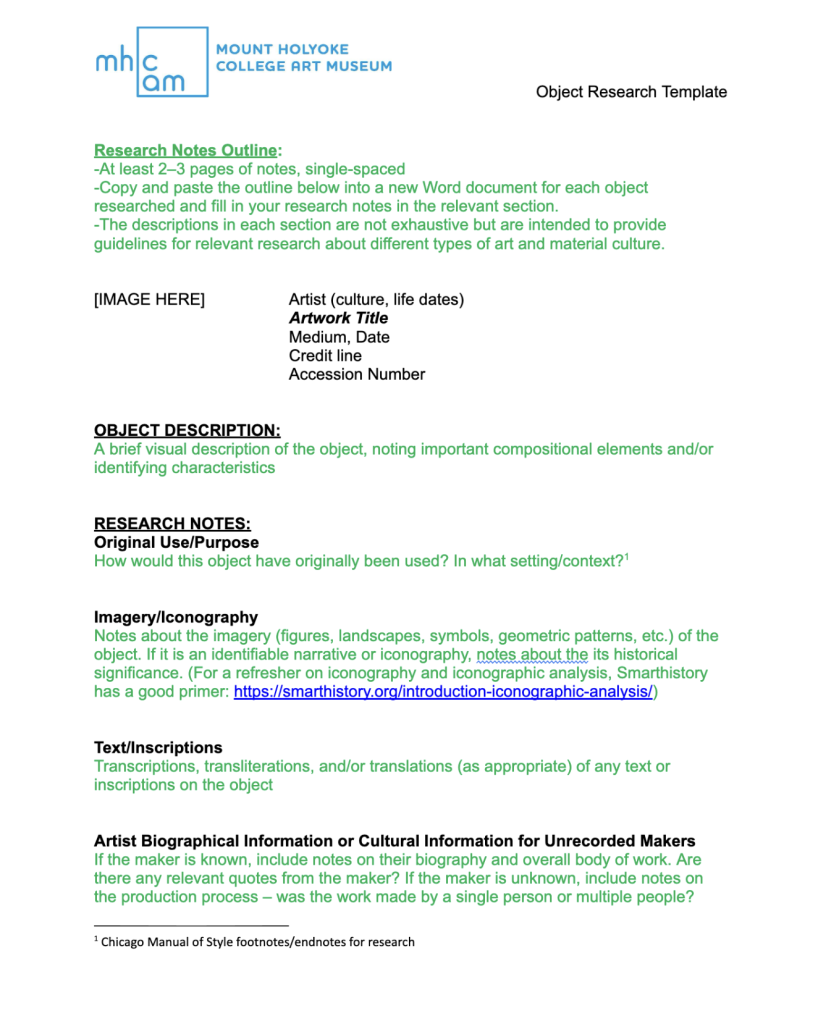
Object research summaries were created at MHCAM to formulate intern research findings and build a strong understanding of an object’s composition, physical properties, and historical background. An object research summary is outlined by different categories of analysis, including original use/purpose, imagery/iconography, materials/techniques, cultural/historical significance, provenance, comparanda, and more. While these sections are not exhaustive, an ORS establishes a thorough base of research for future scholars to form their own interpretations from.
The Importance of Object Files
Information about the Mount Holyoke College Art Museum’s collection is organized by a detailed filing system that allocates both a physical file and digital record for each object in the Museum’s collection. Physical object files contain basic information on the work, artist biographies and/or cultural background, historical context, and documentation or correspondence regarding the Museum’s acquisition and care of the object. The curatorial team consults object files to write labels and wall text, evaluate the condition of the object, and trace the object’s provenance before its entry into the Museum’s collection. As a teaching museum, our object files are also frequently used to support student research, whether for a class project, object research for a student guide’s tour, or general inquiries into the Museum’s collections. This wealth of student research in turn supports the strength of the Museum’s object files, as research findings made by students can be added to the object files upon approval by MHCAM curators.
Intern Insight #2: Object files and specific objects can be pulled from storage for viewing for class-related research, depending on museum capabilities and object condition at time of request. To request to view an object file or physical object, please reach out to Ellen Alvord, Associate Director of Engagement and Weatherbie Curator of Academic Programs, at ealvord@mtholyoke.edu at least two weeks in advance to schedule a viewing appointment.
In all of my roles, the part I have loved the most is working with and forming meaningful friendships with MHCAM professional and student staff over the past three years. The mentorship and support I have received has been unparalleled and instrumental in continuing my journey in the museum world and pursuing my Master’s Degree in Art History this fall at the Courtauld Institute of Art.
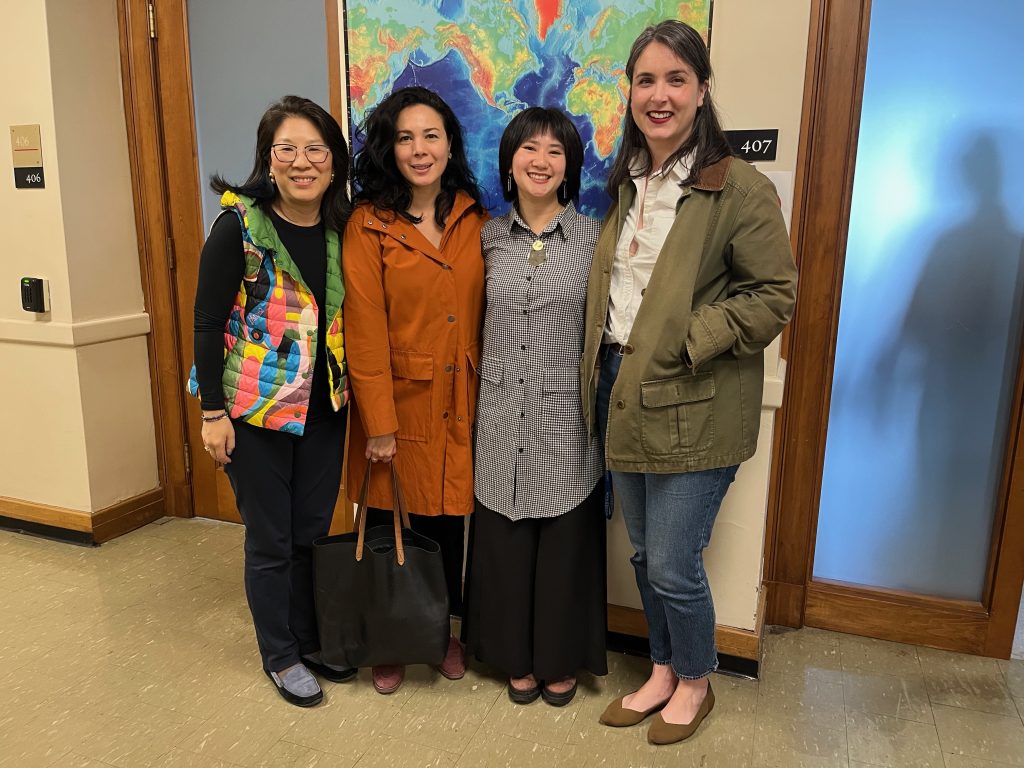
after my Leap Symposium Presentation in October 2025
Photo credit: Suzan Harrison